Is Fashion Design a Practical or Theory-Based Course?
30/10/2026 2026-11-05 12:59Is Fashion Design a Practical or Theory-Based Course?
Is Fashion Design a Practical or Theory-Based Course?
Imagine having a sketchbook full of clothing designs, a collection of outfit ideas saved on your phone, and a Pinterest board filled with colours, fabrics and silhouettes you would love to experiment with. You know what you want your designs to look like, but can you turn those ideas into actual garments? Can you choose the right fabric, understand how a pattern works, create a wearable silhouette and make sure the finished outfit looks the way you imagined it? This is where fashion design education comes into the picture.
One question many students ask before choosing a fashion design course is, is fashion design a practical or theory-based course? The simple answer is that it involves both. Fashion design is a creative field, but it also requires technical knowledge, an understanding of the fashion industry and the ability to turn ideas into finished products. You need to understand the principles behind a design, but you also need opportunities to apply those principles through sketching, fabric experiments, pattern making, stitching and garment construction.
In this blog, we will look at the practical and theoretical aspects of fashion design, the skills students develop, the importance of hands-on learning and what to consider when choosing an institute. By the end, you will have a clearer idea of what studying fashion design involves and whether it matches the kind of career you want to build.

Is Fashion Design a Practical or Theory-Based Course? Understanding the Basics
Fashion design is best understood as a combination of theoretical learning and practical application. Neither aspect works particularly well on its own. Theory helps students understand why certain design decisions work, while practical sessions give them the opportunity to test those decisions and learn from the results.
Here are five important aspects that explain how the two come together.
1. Learning the principles of fashion design
Before creating a garment, students need to understand the basic principles of design. These include colour, proportion, balance, texture, shape and visual harmony. They help designers decide how different elements should come together in an outfit.
For instance, a student designing formal wear needs to consider how the silhouette, fabric and colour work together. Theoretical knowledge provides a foundation for making these decisions, while sketching and creating samples help students understand how those choices translate into an actual garment.
2. Applying knowledge through practical work
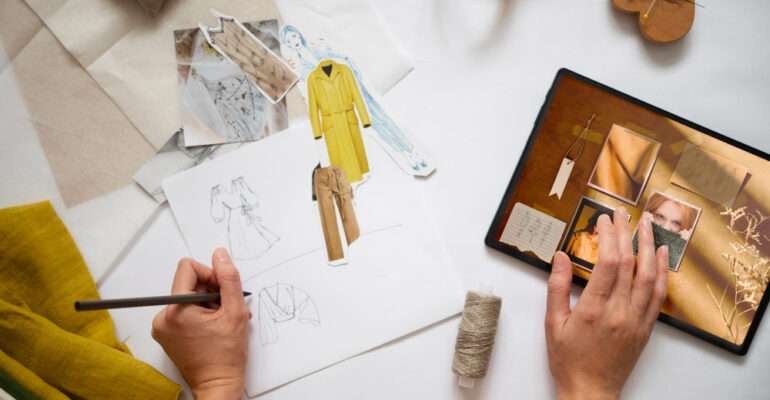
Fashion design becomes more interesting when students begin experimenting with their ideas. They may create illustrations, test different fabrics, develop mood boards, drape materials on mannequins or construct garment samples.
These activities help students understand the practical challenges involved in making clothing. A design that looks attractive on paper may need adjustments when converted into a pattern or stitched together. Practical learning allows students to identify such problems and find solutions.
3. Understanding textiles and fabrics
Textile knowledge is another important part of fashion education. Students learn about different fibres, fabric structures, textures, weights and finishes. These concepts help them understand why certain materials are better suited to particular garments.
However, reading about fabrics is only one part of the learning process. Handling materials, comparing their properties and observing how they behave during stitching or draping provides a more complete understanding.
4. Studying fashion history and industry trends
Fashion does not develop in isolation. Historical movements, cultural influences, social changes, technology and consumer preferences all influence the clothes people wear.
Studying fashion history and industry trends helps students understand these influences and use them when developing concepts. Practical assignments can then encourage them to interpret historical styles or contemporary trends in their own way instead of simply copying existing designs.
5. Developing an individual design approach
Theoretical knowledge gives students a starting point, but practical work helps them discover their own preferences and strengths. One student may enjoy creating experimental silhouettes, while another may prefer detailed embroidery, structured garments or minimalist clothing.
Through repeated practice, feedback and revisions, students can begin developing a recognisable design approach. This combination of knowledge and experimentation is what makes fashion design a field that requires both thinking and doing.
What Are the Theory-Based Subjects in a Fashion Design Course?
Theory-based subjects help students understand the ideas, principles and industry knowledge behind fashion. They provide the background needed to make informed creative decisions rather than relying entirely on instinct.
Here are five areas students may study as part of a fashion design programme. The exact subjects and their depth vary depending on the institute and course level.
Fashion illustration and design principles
- Students learn about the fundamentals of visual communication, including proportions, shapes, colours and the presentation of design ideas.
- They may also study how to represent garments, textures and details through drawings.
- This knowledge helps them communicate concepts clearly before beginning the construction process.
- Even when digital design tools are used, an understanding of visual principles remains important.
Textile science
- Textile science introduces students to the materials used in clothing and other fashion products.
- Topics may include natural and synthetic fibres, yarns, fabric construction, dyeing, printing and finishing.
- Understanding these concepts helps designers choose suitable materials for different purposes.
- A flowing dress, a structured jacket and sportswear all have different requirements, so material selection needs more than a visual judgement.

History of fashion
- Fashion history introduces students to clothing styles, designers, movements and cultural influences from different periods.
- It helps them understand how fashion has changed and why certain styles have become significant.
- This knowledge can also support research for new collections.
- A designer may take inspiration from a historical silhouette, traditional craft or an earlier fashion movement and reinterpret it for a contemporary audience.
Fashion marketing and merchandising
- Designers benefit from understanding how fashion products reach consumers.
- Fashion marketing and merchandising introduce concepts such as target audiences, product positioning, pricing, buying behaviour and retail trends.
- For example, designing for a luxury label involves different considerations from creating a collection for an affordable everyday-wear brand.
- Understanding the market helps students connect their creative ideas with the needs of a particular audience.
Fashion forecasting and research
- Fashion forecasting involves studying emerging trends, consumer preferences, colours, materials and broader cultural influences to anticipate what may become relevant in the industry.
- Research gives designers a foundation for developing collections with a clear direction.
- Rather than choosing colours or silhouettes randomly, students can learn to support their decisions with observations, references and an understanding of their intended audience.
What Practical Skills Do Students Learn in Fashion Design?
Practical learning allows students to experience the actual process of developing clothing. It also helps them understand that a finished garment involves multiple decisions, adjustments and technical steps.
The following five skills are particularly important.
- Fashion sketching and illustration
- Students practise translating ideas into visual designs.
- They learn to draw fashion figures, represent garment proportions, communicate details and explore variations in a design.
- Sketching is useful during the early stages of a collection because it allows students to compare ideas before committing time and materials to a garment.
- It also helps them communicate their concepts to other people involved in the design process.
- Pattern making
- Pattern making involves creating the shapes and measurements needed to construct a garment from fabric.
- Students learn how to develop patterns based on measurements, garment styles and design requirements.
- This is where they begin to understand the relationship between a two-dimensional pattern and a three-dimensional garment.
- Small changes in measurements or construction can affect the fit, so accuracy and repeated practice are essential.
- Garment construction and stitching
- Garment construction teaches students how clothing is assembled.
- They may learn about seams, hems, fastenings, garment components and different stitching techniques.
- These skills help students understand how a design moves from an idea to a wearable product.
- They also learn why construction details matter, since a garment needs to look good while remaining comfortable and functional.
- Draping and fabric experimentation
- Draping involves arranging fabric on a mannequin or form to explore shapes, folds and silhouettes.
- It allows students to see how materials fall, stretch or hold their shape.
- This can be particularly useful when developing garments with complex silhouettes or flowing forms.
- Experimenting with different fabrics helps students understand that the same design may look very different depending on the material used.
- Creating fashion collections
- Collection development brings several skills together.
- Students may research a theme, prepare mood boards, choose a colour palette, develop sketches, select fabrics and create garments that work together visually.
- This process teaches them how to maintain a consistent design direction while making individual pieces interesting.
- It also helps them understand the planning and decision-making involved in developing a collection rather than designing isolated outfits.
Practical vs Theory-Based Learning in Fashion Design
So, what is the difference between learning fashion design through theory and learning it through practice? Both contribute to a student’s development, but they serve different purposes.
| Area of Learning | Theory-Based Learning | Practical Learning |
| Fashion Illustration | Understanding proportions, colour theory and design principles | Sketching garments and presenting original design ideas |
| Textile Knowledge | Learning about fibres, weaves, fabric properties and finishes | Handling fabrics and testing their suitability for different garments |
| Pattern Making | Understanding measurements, pattern terminology and construction principles | Drafting, modifying and testing patterns |
| Garment Construction | Learning about seams, stitching methods and garment components | Stitching samples and assembling garments |
| Fashion History | Studying designers, historical periods and cultural influences | Using research to develop a contemporary design concept |
| Fashion Forecasting | Understanding trends and consumer behaviour | Creating mood boards and developing a collection based on research |
| Fashion Marketing | Learning about target audiences, branding and product positioning | Preparing a concept or collection for a specific customer group |
| Design Development | Understanding how design elements work together | Experimenting with silhouettes, materials and garment details |

How to Choose the Right Fashion Design College in Bangalore
If you are searching for a Fashion Design College in Bangalore, it is worth looking beyond the course title. Two programmes may both offer fashion design education but differ in their teaching methods, practical opportunities, facilities and project requirements.
Consider these five factors when comparing your options.
A curriculum that covers essential design skills
- Look for a programme that introduces you to the main areas of fashion design, including illustration, textiles, pattern making, garment construction and collection development.
- A well-rounded curriculum can help you understand how the different stages of design connect.
- It also gives you a chance to discover which areas interest you most as you progress through the course.
Opportunities for hands-on learning
- Practical sessions are important because they allow you to apply concepts rather than simply study them. Look into how the programme approaches workshops, garment construction, material experimentation and design assignments.
- Ask how students progress from basic exercises to more detailed projects.
- The opportunity to practise techniques repeatedly can make a meaningful difference to skill development.
Access to relevant facilities and tools
- Fashion design may involve sewing equipment, mannequins, fabric samples, pattern-making resources and digital design tools.
- Depending on the programme, students may also use software for illustration or presentation.
- Understanding what resources are available and how students use them can help you assess whether the learning environment supports your interests.
Faculty guidance and project feedback
- Feedback helps students understand where their work is strong and where it needs improvement.
- Guidance during sketching, pattern making and garment construction can help them identify mistakes and develop better techniques.
- When comparing institutes, consider how students receive feedback, how projects are evaluated and what opportunities they have to improve their work.
Portfolio development and career preparation
- A portfolio can help demonstrate your design thinking and technical abilities to potential employers or clients.
- Look for opportunities to create projects that show different stages of your work, from initial research to finished garments.
- You can also explore whether the programme offers career guidance, industry interactions, internships or other professional development opportunities.
- These details can help you understand how the course supports your longer-term goals.
Why Choose JD Institute for Fashion Designing?
For students looking to turn their interest in clothing and creativity into a career, JD Institute is worth considering as they compare fashion design education options. Students exploring the Best Fashion Design Colleges in Bangalore can look at how JD Institute aligns with their interests in creative development, practical design skills and understanding the fashion industry. A fashion design education should help students progress from developing ideas to understanding how those ideas can become finished garments.
One of the important benefits to look for at JD Institute is the opportunity to develop a foundation in fashion design while exploring different aspects of the field.
Understanding design principles, textiles, garment construction and collection development can help aspiring designers build the knowledge needed to approach projects with greater confidence. Practical assignments and design projects can also give students opportunities to experiment with ideas, understand their strengths and work towards creating a portfolio that showcases their abilities.
For students considering a Fashion Design College in Bangalore, JD Institute is an option to explore when looking for a course that connects creative interests with the practical demands of fashion. Prospective students can review the current curriculum, project work, facilities, faculty guidance and career support to understand the learning opportunities available. The aim is to find an environment that helps you build your design skills, develop your own creative approach and prepare for the career path you want to pursue.

What Career Opportunities Can Fashion Design Students Explore?
Fashion design education can lead to several career paths, depending on a student’s interests, skills and experience. Some roles focus on creating garments, while others involve materials, visual communication, product development or the business side of fashion.
Here are five career directions students may consider.
Fashion designer: Fashion designers develop concepts for clothing collections, select materials, create sketches and work on garment development. They may specialise in areas such as womenswear, menswear, occasion wear, childrenswear or contemporary fashion.
Textile designer: Textile designers work on patterns, prints, colours and surface designs for fabrics. Their work may be used in apparel, accessories, home furnishings and other textile products.
Fashion stylist: Fashion stylists put together clothing, accessories and visual elements for photoshoots, campaigns, editorial projects, events or individual clients. They need to understand how colours, proportions and clothing styles work together.
Fashion merchandiser: Fashion merchandisers connect products with the market. Their responsibilities may include analysing trends, understanding customer preferences, planning product ranges and coordinating aspects of product presentation or sales.
Fashion entrepreneur: Students interested in starting their own label can explore entrepreneurship after developing relevant design and business skills. This may involve creating collections, sourcing materials, managing production, developing a brand identity and reaching customers.
Fashion Design Brings Theory and Practice Together
A fashion design course gives students the opportunity to understand the ideas behind clothing and learn how to turn those ideas into something tangible. You may begin with a simple sketch, a fabric sample or a concept inspired by a particular trend. As you work on it, you start making decisions about materials, proportions, construction and finishing. You may discover that the original idea needs a few changes, or you may find a better way to bring it to life. That process of learning, experimenting and improving is a major part of fashion design education.
So, is fashion design a practical or theory-based course? It is both, and the two aspects are closely connected. Theory helps you understand textiles, design principles, fashion history, trends and the business behind the industry. Practical learning allows you to apply that knowledge through illustration, pattern making, stitching, draping and collection development. Together, they help you become more confident in your creative decisions and more capable of solving design challenges.
Ultimately, fashion design is not simply about knowing the rules or having a good eye for clothing. It is about learning how to use knowledge, creativity and technical skills together. If you enjoy imagining new designs and are willing to practise, experiment and improve, a fashion design course can give you a foundation to explore your interests and work towards a career in the fashion industry.