
M.Des in Interior Ecodesign and Bioarchitecture
27/11/2025 2026-06-08 17:13M.Des in Interior Ecodesign and Bioarchitecture
M.Des in Interior Ecodesign and Bioarchitecture
About Course
The MDes in Interior Ecodesign and Bioarchitecture is a future-forward postgraduate program crafted to train designers who can create environmentally responsible, biocompatible, and regenerative interior environments. Rooted in ecological principles, the course blends sustainable materials research, bioclimatic strategies, environmental psychology, circular design thinking, and advanced digital tools for eco-simulation.
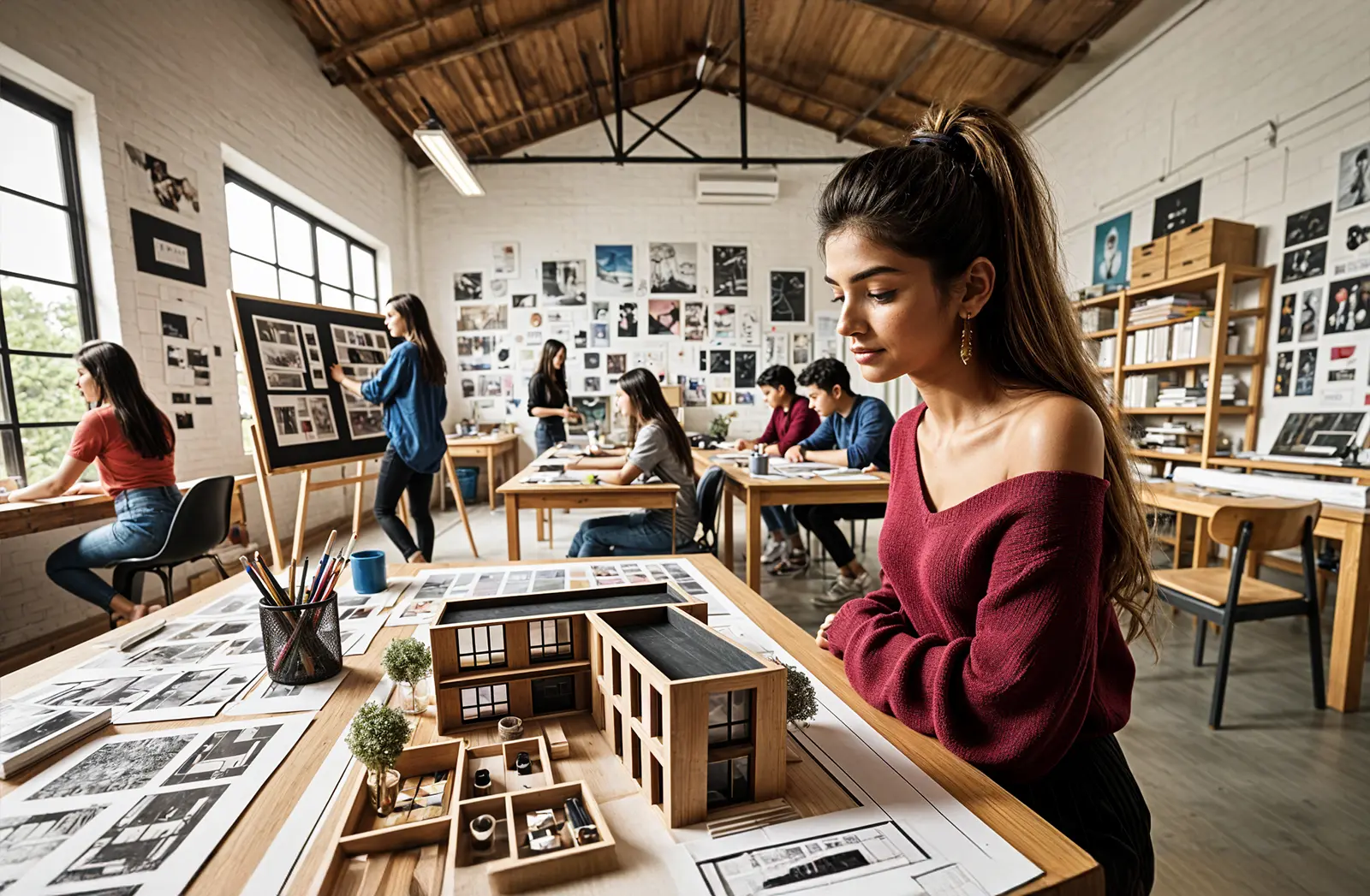
Adopting a studio-led, research-driven, and interdisciplinary approach, the program enables students to understand the life cycle of materials and products—from conception and extraction to construction, use, and post-use recovery. Through hands-on projects, field studies, prototyping, and ecological performance assessments, students learn to design spaces that minimize environmental impact while maximizing human well-being.
By the end of the program, graduates will be equipped with strong conceptual, scientific, and technological competencies to work in sustainable design studios, green building consultancies, regenerative urban development, and environmental innovation sectors.

Duration: 2 Years
Eligibility:
- Bachelor’s degree in Design, Architecture, Interior Design, Engineering, Fine Arts or related fields
- No prior ecodesign experience required—interest in sustainability is ideal
- Basic digital competency recommended
- Curiosity about ecological systems, materials, and human–environment relationships
Availability: Bengaluru
Course with Built-in AI Training
Why Choose JD Institute for this MDes Program in Interior Ecodesign and Bioarchitecture?
The MDes in Interior Ecodesign and Bioarchitecture stands out for its integration of environmental science, interior architecture, circular systems, and bio-based design innovation. Students engage with:
- Ecodesign principles grounded in global sustainability standards
- Bioarchitecture techniques that prioritize natural materials and human health
- Advanced simulation tools for energy, daylight, climate, and material impact
- Field studies in regenerative urban sites, green buildings, and eco-material labs
- Collaborative projects with industry, sustainability experts, NGOs, and architects
The curriculum encourages an equilibrium between scientific research, digital technology, and hands-on ecological experimentation, preparing graduates to lead the future of sustainable spatial design.
Career Opportunities
- Ecodesigner / Sustainable Interior Designer
- Bioarchitect
- Green Building Specialist
- Environmental Simulation Specialist
- Circular Product Designer
- Urban Regeneration Expert
- Interior Sustainability Consultant
- Environmental Project Manager
- NGO / Government Sustainability Associate
Learning Outcomes
- Apply ecological and bioclimatic principles to interior and architectural design.
- Conduct Life Cycle Assessments and evaluate materials for environmental impact.
- Use BIM, Rhino, SketchUp, Grasshopper, and eco-simulation tools to model sustainable spaces.
- Create passive design strategies to improve energy efficiency and occupant health.
- Integrate low-impact and renewable materials into ethical design solutions.
- Produce professional renderings and VR walkthroughs of eco-interiors.
- Communicate sustainability concepts through diagrams, visual storytelling, and documentation.
- Assess environmental performance of interiors through simulation and prototyping.
- Work collaboratively on real-world ecological design interventions.
- Develop an advanced, research-backed portfolio demonstrating ecodesign competence.
Software & Tools Covered
- AutoCAD / Revit (BIM)
- Rhino + Grasshopper
- SketchUp + V-Ray
- Enscape
- Adobe Creative Suite
- Ecotect / Sefaira
Reasons To Apply
- Learn the foundations of ecodesign, bioarchitecture, and regenerative thinking.
- Master eco-friendly materials, LCA processes, and sustainability assessment tools.
- Gain proficiency in BIM, 3D modeling, and environmental simulation platforms.
- Understand bioclimatic strategies and energy-efficient interior planning.
- Build a research-driven and studio-based eco portfolio for global opportunities.
- Learn from practicing bioarchitects, sustainability experts, and green consultants.
- Develop strong technical, conceptual, and ethical competencies.
- Explore multiple environmental design sectors—from interiors to urban regeneration.
- Be prepared to contribute to climate-responsible design practices worldwide.
Course Overview
Foundational Ecodesign Principles
Develop a deep understanding of ecological design frameworks, including environmental psychology, sustainable spatial planning, and biocompatible material use. Learn how interior environments affect human health, wellbeing, and ecological impact.
Environmental Technologies & Green Materials
Gain hands-on knowledge of renewable, recycled, low-impact, and biodegradable materials. Explore energy-efficient and smart technologies, life cycle assessment (LCA), and methods to measure sustainability performance across a building’s lifespan.
Bioclimatic Interior Design
Understand climate-responsive interior strategies such as passive ventilation, daylight optimization, thermal comfort through natural means, acoustic well-being, and indoor air quality enhancement—core elements of bioarchitecture.
Design Studios & Applied Ecological Projects
Work on real-world ecodesign projects that integrate sustainable materials, renewable resources, and environmentally conscious construction methods. Develop conceptual and technical design outputs grounded in ecological thinking.
3D Modeling & Eco-Simulation Tools
Use advanced digital platforms including Rhino, Revit (BIM), SketchUp, Grasshopper, and Sefaira to model sustainable interiors. Perform simulations for daylight, energy efficiency, ventilation, thermal comfort, and environmental performance.
Rendering & Visualization for Eco-Interiors
Apply tools such as V-Ray, Enscape, and Twinmotion to create photorealistic ecological interior renders. Focus on natural light behavior, organic materials, and green interior elements.
Sustainable Communication & Presentation
Use Adobe Suite to create ecological moodboards, material palettes, environmental diagrams, LCA visuals, and storytelling layouts that communicate environmental responsibility and design intent clearly and professionally.
Ideal for Green Career Pathways
Perfect for aspiring sustainable designers, bioarchitects, eco-consultants, green building specialists, environmental planners, and regenerative design practitioners.
Course Structure
1st Year
Ecodesign & Sustainable Foundations
Module 1: Principles of Ecodesign & Bioarchitecture
Module 2: Environmental Technologies & Materialse
Module 3: Bioclimatic Interior Design
Module 4: Digital Modeling & Simulation Tools
Project 01: Sustainable Space Design
2nd Year
Advanced Practice & Research
Module 5: Circular Design & Product Innovation
Module 6: Urban & Environmental Regeneration
Module 7: Sustainable Project Management & Professional Practice
Project 02: Applied Bioarchitecture Project
Final Thesis: Independent Research or Design Project
Frequently Asked Questions
1. What is the starting salary after M.Des in Interior Ecodesign and Bioarchitecture?
The starting salary after completing this course typically ranges from ₹4 LPA to ₹8 LPA in India, depending on portfolio quality, internships, software expertise, and project exposure. Students at JD Institute gain practical industry experience through workshops, studio projects, and sustainable design practices that support better career opportunities.
2. Does the M.Des in Interior Ecodesign and Bioarchitecture include internships and industry exposure?
Yes, the program includes industry interaction, live projects, workshops, site visits, and internship opportunities that help students gain practical exposure in sustainable and environmentally conscious interior design practices.
3. Will I build a portfolio during the M.Des in Interior Ecodesign and Bioarchitecture course?
Yes, portfolio development is an important part of the mdes in interior ecodesign program at JD Institute. Students work on sustainable spatial concepts, ecological design solutions, bioarchitecture projects, and research-based interiors that strengthen their professional portfolio for placements and freelance opportunities.
4. Does JD Institute offer placement support after M.Des in Interior Ecodesign and Bioarchitecture?
Yes, JD Institute of Fashion Technology provides placement assistance through portfolio mentoring, internships, networking opportunities, design exhibitions, and industry collaborations that help students build professional connections and career opportunities in sustainable design sectors.
5. Is M.Des in Interior Ecodesign and Bioarchitecture a good career option?
Yes, M.Des in Interior Ecodesign and Bioarchitecture is a strong career option for students interested in sustainable interiors, ecological spaces, and environmentally responsible design solutions. The program combines creativity, sustainability, technology, and research-oriented learning to prepare students for future-focused design careers.
6. Are there international career opportunities after M.Des in Interior Ecodesign and Bioarchitecture?
Yes, graduates from the mdes in interior bioarchitecture program can explore global opportunities in sustainable architecture firms, eco-conscious interior studios, green building consultancies, wellness space design, and environmental planning organizations that focus on sustainable living solutions.
1. Is M.Des in Interior Ecodesign and Bioarchitecture worth pursuing in 2026?
Yes, pursuing an mdes in interior ecodesign & bioarchitecture in 2026 is highly relevant due to the increasing demand for sustainable and environmentally conscious spaces. The program prepares students for careers focused on ecological interiors, green building concepts, sustainable materials, and future-oriented spatial innovation.
2. What is the scope of M.Des in Interior Ecodesign and Bioarchitecture in India?
The scope of a Sustainable interior design masters course in India is growing steadily with rising awareness around sustainable living, eco-friendly interiors, and green construction practices. Graduates can work with interior firms, sustainable architecture studios, hospitality brands, wellness design companies, and environmental planning organizations.
3. What career roles can I pursue after M.Des in Interior Ecodesign and Bioarchitecture?
After completing a sustainable spatial design program, students can work as:
- Sustainable interior designer
- Ecodesign consultant
- Bioarchitecture designer
- Spatial experience designer
- Green building consultant
- Interior sustainability strategist
The program also opens opportunities in research, sustainable product design, environmental planning, and design entrepreneurship.
4. Can I start my own sustainable design studio after completing this program?
Yes, the M.Des in Interior Ecodesign and Bioarchitecture program includes entrepreneurial and design management concepts that help students understand branding, project execution, sustainability consulting, and client management, making it easier to start an independent eco-focused design studio.
5. What industries hire graduates from sustainable spatial design programs?
Graduates from mdes in interior ecodesign can work across industries such as:
- Sustainable architecture firms
- Hospitality and wellness design
- Real estate and green infrastructure
- Retail and experiential interiors
- Environmental consulting firms
- Furniture and material innovation brands
6. Can I work in research and innovation after M.Des in Interior Bioarchitecture?
Yes, students completing M.Des in Interior Bioarchitecture can pursue research-based careers in sustainable materials, environmental psychology, regenerative design systems, ecological planning, and human-centric spatial innovation.
7. Is entrepreneurship encouraged in the Sustainable Interior Design Masters Course?
Yes, the mdes in interior ecodesign at JD Institute encourages entrepreneurship through design thinking, innovation projects, sustainability-focused business concepts, and professional portfolio development that support independent practice and startup opportunities.
1. What subjects are included in the M.Des in Interior Ecodesign and Bioarchitecture curriculum?
The curriculum combines creative, technical, and sustainability-focused subjects that prepare students for advanced interior and ecological design careers. Students pursuing M.Des in Interior Ecodesign and Bioarchitecture at JD Institute learn subjects such as:
- Sustainable spatial design
- Ecological interior systems
- Bioarchitecture concepts
- Green material studies
- Interior ergonomics
- Environmental psychology
- Lighting and climate-responsive design
- Sustainable furniture systems
- Digital visualization and CAD
- Design research methodologies
- Smart and adaptive interiors
- Professional practice and entrepreneurship
2. What skills will I learn in the M.Des in Interior Ecodesign and Bioarchitecture program?
Under the M.Des in Interior Ecodesign and Bioarchitecture course, students develop skills in:
- Sustainable space planning
- Ecological material selection
- Design research and analysis
- Interior visualization and rendering
- Green building concepts
- Human-centric spatial design
- Concept development and storytelling
The program also focuses on critical thinking, innovation, sustainability practices, and design strategy aligned with evolving industry requirements.
3. Will I learn digital design software during the program?
Yes, the M.Des in Interior Ecodesign and Bioarchitecture program includes industry-relevant digital tools and visualization software that support sustainable interior workflows. Students are introduced to:
- AutoCAD for technical drafting
- SketchUp for 3D spatial visualization
- Adobe Photoshop for presentations and mood boards
- Adobe Illustrator for concept development
- Revit for BIM and spatial planning
- Lumion and V-Ray for rendering and visualization
4. Is AI in interior design included under this program?
Yes, JD Institute integrates AI in interior design and emerging digital technologies within the program to help students stay aligned with evolving industry practices. Students gain exposure to:
- AI-assisted space planning tools
- Smart interior visualization systems
- Sustainable material analysis software
- Data-driven environmental design tools
- Digital simulation for lighting and energy efficiency
- AI-supported concept generation and workflow optimization
5. Does the course focus on sustainable materials and eco-friendly design?
Yes, sustainable material exploration is an important part of the M.Des in Interior Ecodesign and Bioarchitecture curriculum. Students learn about environmentally responsible materials, recycled systems, adaptive reuse strategies, energy-efficient interiors, and low-impact design solutions.
6. How does this advanced interior design course combine sustainability and technology?
This advanced interior design course combines sustainability principles with modern technology through smart spatial planning, digital simulations, climate-responsive design approaches, and eco-conscious material research. Students learn to create spaces that are both aesthetically innovative and environmentally responsible.
1. Do I need prior interior design experience to join M.Des in Interior Ecodesign and Bioarchitecture?
No, students from creative and design-related backgrounds can apply for this course. JD Institute helps students build conceptual, technical, and sustainability-focused design skills through structured studio learning and practical projects.
2. How long is the M.Des in Interior Ecodesign and Bioarchitecture course?
The mdes in interior ecodesign is generally a 2-year postgraduate program divided into multiple semesters. The course includes studio-based learning, workshops, research projects, portfolio development, internships, and industry exposure.
3. What makes JD Institute a good choice for M.Des in Interior Ecodesign and Bioarchitecture?
JD Institute stands out for sustainable design education because of:
- Industry-oriented curriculum
- Focus on ecological and human-centric design
- Practical studio-based learning
- Strong industry exposure and workshops
- Integration of technology and sustainability
- Portfolio-focused mentorship
The program helps students develop both creative and technical expertise relevant to modern sustainable design industries.
4. What is the eligibility for M.Des in Interior Ecodesign and Bioarchitecture?
The eligibility criteria for an environmental interior design masters generally require students to complete a bachelor’s degree from a recognized university. Students from interior design, architecture, design, fine arts, or related creative fields can apply for the program.
5. Are workshops and live projects included in the Sustainable Spatial Design Program?
Yes, this program includes workshops, collaborative projects, design studios, sustainability-focused research activities, and industry interactions that help students gain practical learning experience.
6. Will students participate in exhibitions and design showcases during the course?
Yes, students pursuing M.Des in Interior Ecodesign and Bioarchitecture at JD Institute get opportunities to participate in exhibitions, design showcases, portfolio presentations, and collaborative projects that help build professional exposure and networking opportunities.
Reserve Your Spot Now
Related Courses