

What Skills Are Required to Become an Interior Designer?
30/09/2026 2026-09-30 18:01What Skills Are Required to Become an Interior Designer?

What Skills Are Required to Become an Interior Designer?
Walk into a beautifully designed home, hotel lobby, restaurant, or office and the first thing you may notice is how good the space looks. The colours work together, the furniture seems perfectly placed, the lighting creates the right mood, and every corner feels intentional. But good interior design is not simply about choosing attractive furniture or matching colours. There is a lot of thought, planning, technical knowledge, and problem-solving behind a well-designed space.
This is why students interested in interior design often ask, what skills are required to become an interior designer? The answer goes far beyond creativity. A successful interior designer needs to understand how spaces work, how people use them, how materials behave, how designs are communicated, and how an idea can eventually become a finished space.
This is particularly important when choosing an interior design course. If you are looking at Interior Designing Colleges & Courses in Bangalore, you should look beyond the course title and understand what you will actually learn. A good course should help you develop both creative and technical abilities through assignments, projects, studio work, software training, presentations, and practical exposure.
So, what skills are required to become an interior designer? From creativity and spatial thinking to technical drawing, material knowledge, digital tools, communication, and project management, there is a wide range of skills that can shape your career in this field. Let us look at the most important ones and understand why each matters.
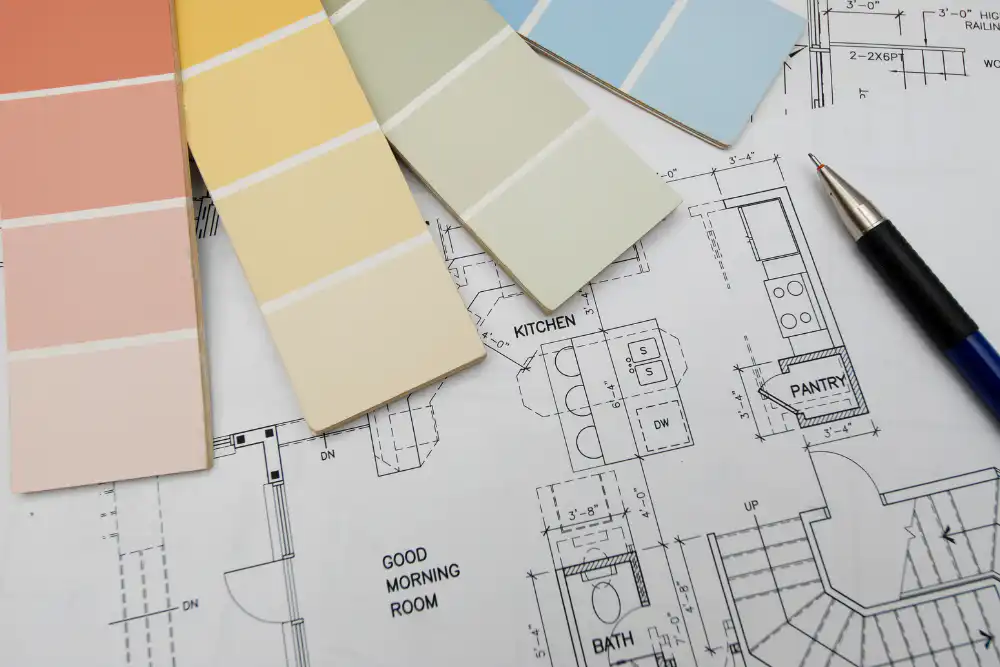
Creative Thinking: The Skill Behind Every Interior Design Idea
Creativity is probably one of the first things people associate with interior design. But creativity in this field is not simply about coming up with unusual ideas. It is about finding interesting and practical ways to solve design problems.
An interior designer may be given a small bedroom, an oddly shaped living room, a compact office, or a restaurant with a specific brand identity. Each situation requires a different approach.
Here are some creative skills you need to develop:
- Concept development: You should be able to take a basic requirement and develop a complete design concept around it. For example, a client may want a calm and minimal bedroom. You need to decide what colours, textures, furniture forms, lighting, and materials can create that feeling.
- Colour sense: Understanding colour combinations is important because colours can influence the mood and visual balance of a space. You should learn how different shades work together and how lighting can change the way a colour appears.
- Visual imagination: Before a space is actually built, you need to imagine how different elements will come together. This helps you create designs that feel cohesive rather than looking like a collection of unrelated objects.
- Experimentation: Interior design involves trying different layouts, materials, textures, furniture arrangements, and concepts. Being comfortable with experimentation can help you discover better design solutions.
- Problem-solving through design: Creativity becomes particularly valuable when there are limitations. A restricted budget, small area, unusual room shape, or specific client requirement can become a design challenge that requires a creative solution.
Creativity is therefore not something that exists separately from technical knowledge. The strongest designers learn how to combine creative thinking with practical understanding.
Spatial Awareness and Space Planning
Imagine designing a living room where the furniture looks beautiful individually but leaves almost no space to walk around. The room may look attractive in a drawing, but it would not function well in real life.
This is where spatial awareness becomes important.
Interior designers need to understand how people move through a space and how different elements should be positioned. Space planning involves deciding where furniture, partitions, storage, lighting, fixtures, and other elements should be placed.
What does good space planning involve?
Understanding proportions: You need to understand the relationship between the size of the room and the size of the furniture or other elements inside it.
- Creating movement: People should be able to move comfortably through a space. A good layout should not create unnecessary obstacles.
- Balancing open and occupied areas: A room that is too crowded can feel uncomfortable, while one with too much empty space may feel unfinished. Designers need to find the right balance.
- Considering functionality: A kitchen, bedroom, office, retail store, and restaurant all have different functional requirements. The layout should support how the space will actually be used.
- Making small spaces work: Space planning becomes especially important in compact homes and apartments. Designers may need to use multifunctional furniture, smart storage, partitions, or flexible layouts.
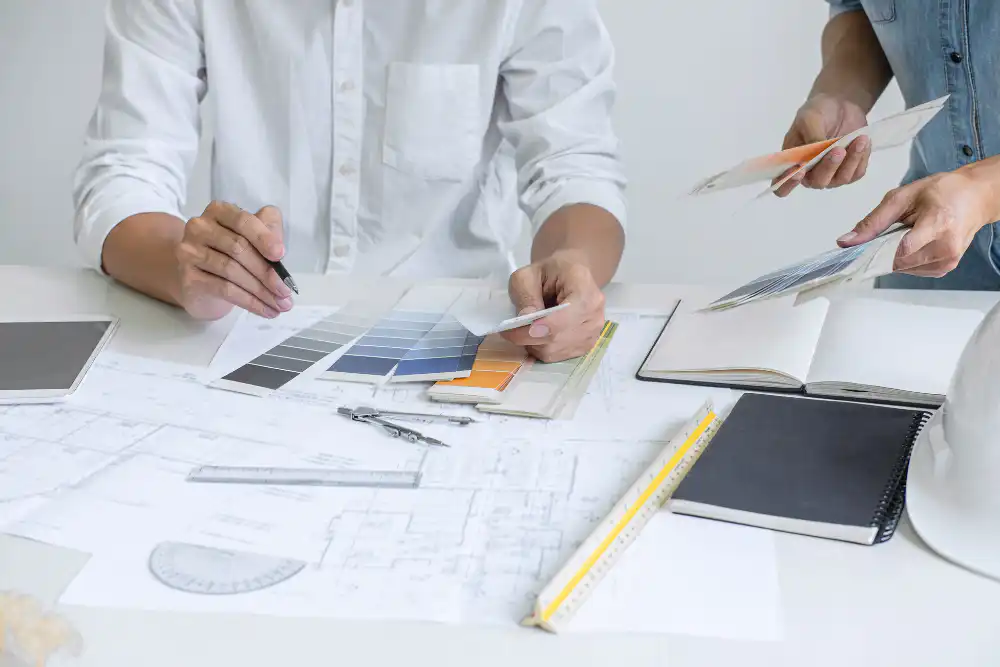
Drawing and Visual Communication Skills
You may have a great interior design idea in your head, but you need to communicate that idea to someone else. This is where drawing and visual communication become important.
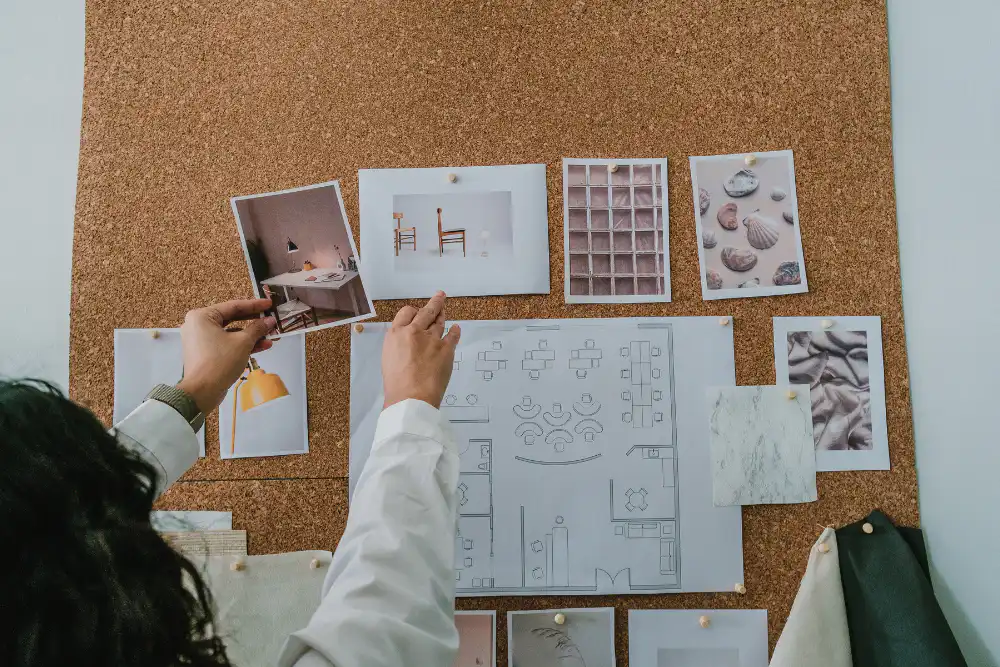
Interior designers use sketches, plans, elevations, mood boards, material boards, presentations, and digital visuals to communicate their ideas.
Some important drawing skills include:
- Freehand sketching: Helps you quickly communicate ideas and explore concepts.
- Perspective drawing: Helps represent spaces and objects in a more realistic way.
- Technical drawing: Allows dimensions, proportions, layouts, and construction details to be communicated accurately.
- Floor plans: Help show how different elements are arranged from a top view.
- Elevations: Show how a particular wall or section of a space will look.
- Mood boards: Help communicate the overall visual direction of a project through colours, materials, images, textures, and references.
You do not necessarily need to be an amazing artist before starting an interior design course. What matters is learning how to use drawing as a design communication tool.
Technical Skills Every Interior Designer Should Develop
Interior design may look creative from the outside, but there is a strong technical side to the profession. Designers need to understand measurements, drawings, materials, furniture details, lighting, finishes, and how different elements come together.
Measurement and dimensions: Accurate measurements are essential. Even a small measurement mistake can affect furniture placement, storage, circulation, or construction.
Technical drawings: Technical drawings communicate important information to contractors and other professionals. Students learn how to create drawings that are clear, detailed, and usable during execution.
Material understanding: A designer should know how materials look, feel, perform, and respond to different environments. Wood, stone, glass, metal, laminates, fabrics, tiles, and other materials each have different characteristics.
Lighting knowledge: Lighting affects both the appearance and functionality of a space. Designers need to understand natural light, artificial lighting, task lighting, ambient lighting, and accent lighting.
Furniture and fixture knowledge: Interior designers often work with furniture, cabinetry, fittings, sanitaryware, hardware, and decorative elements. Understanding their dimensions and practical requirements helps create realistic designs.
These technical skills answer an important part of the question, what skills are required to become an interior designer? Creativity may help you develop the concept, but technical knowledge helps you turn that concept into a workable design.
Digital Design Skills: Learning the Tools Behind Modern Interior Design
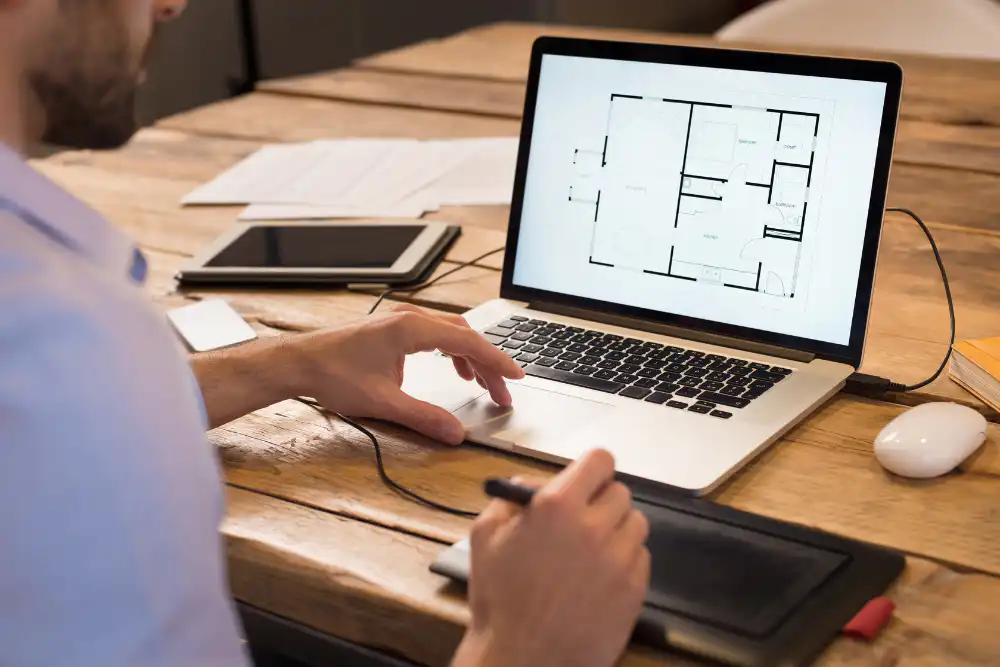
Interior design has changed significantly with the use of digital technology. Today, designers use software to create drawings, layouts, 3D models, renders, presentations, and walkthroughs.
The exact software used can vary depending on the course, studio, workplace, and project, but students should become comfortable with digital design workflows.
| Digital Skill | What It Helps With |
| 2D Drafting | Creating floor plans and technical drawings |
| 3D Modelling | Building digital versions of spaces |
| Rendering | Creating realistic visual representations |
| Presentation Design | Presenting concepts to clients and teams |
| Digital Mood Boards | Communicating colours, materials, and visual direction |
| Space Planning Software | Testing different layouts |
| Design Documentation | Organising project information and drawings |
Why do these skills matter?
Digital tools can make it easier to test ideas before they are executed. You can change furniture placement, experiment with materials, modify colours, adjust lighting, and present different design options.
However, software should not replace design thinking. Knowing which button to press is not the same as knowing what should be designed. Students need to develop their creative and technical understanding alongside digital skills.
This is one reason students exploring Interior Designing Colleges & Courses in Bangalore should look at how much practical software learning is included in the course rather than choosing a programme based only on its title.
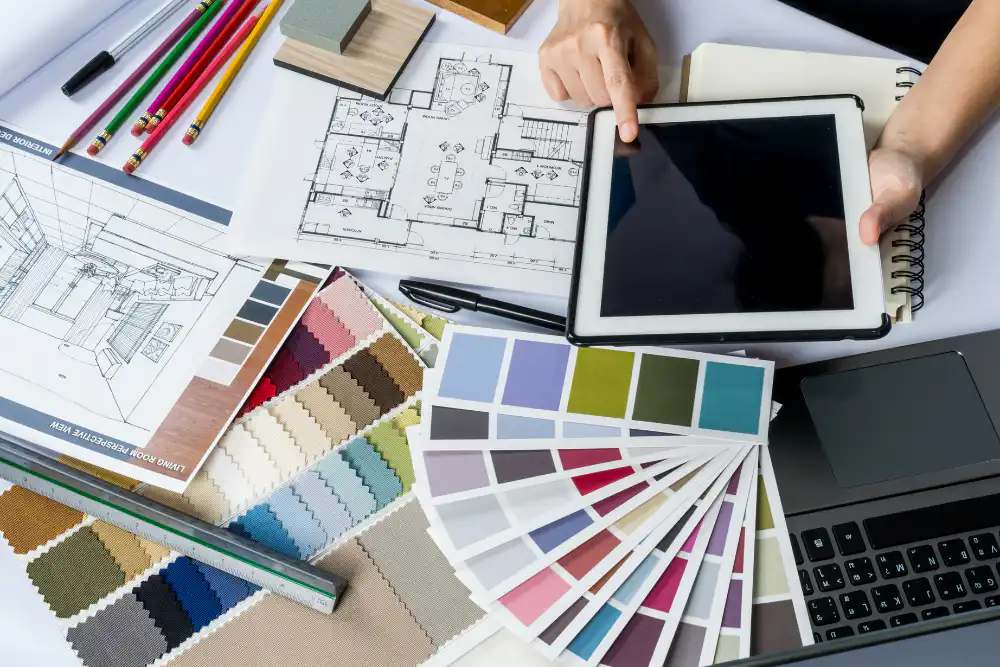
Material and Furniture Knowledge: Understanding What Goes Into a Space
An interior designer works with much more than walls and furniture. A finished interior is made up of many materials, finishes, fixtures, textures, and details.
A designer needs to understand how these choices affect the appearance, comfort, durability, maintenance, and cost of a space.
Five areas students should learn about
- Fabrics and soft furnishings: Curtains, upholstery, cushions, rugs, and other textiles can influence the comfort and visual character of a room.
- Wood and wood-based materials : Different types of wood and engineered materials have different appearances, strengths, finishes, and applications.
- Flooring materials: Tiles, wood, stone, vinyl, and other flooring options need to be considered based on factors such as use, maintenance, durability, appearance, and budget.
- Wall finishes: Paint, wallpaper, panelling, textured finishes, tiles, and other treatments can completely change the character of a room.
- Hardware and fixtures: Handles, hinges, faucets, lighting fixtures, switches, and other small details contribute to both functionality and appearance.
Material knowledge also helps designers communicate more effectively with vendors, contractors, clients, and manufacturers.
Communication Skills: Because Interior Design Is a People-Focused Profession
An interior designer does not work alone.
Even if you have a strong design idea, you will need to explain it to clients, discuss changes with your team, coordinate with contractors, speak to vendors, and sometimes present your ideas to stakeholders.
That makes communication one of the most important professional skills in interior design.
Communication matters in several parts of a project:
Understanding the client
Clients may not always know how to explain exactly what they want. A designer needs to ask the right questions and understand their lifestyle, preferences, budget, and expectations.
Presenting ideas
You should be able to explain why you selected a particular layout, colour scheme, material, or furniture arrangement.
Handling feedback
Not every client will immediately approve your first concept. Designers need to listen to feedback and understand which changes are necessary.
Working with professionals
Contractors, electricians, carpenters, architects, vendors, and other professionals may be involved in a project. Clear communication helps reduce misunderstandings.
Building relationships
Interior design is also a relationship-driven profession. Good communication can help create trust and make clients more comfortable working with you.
This is another important part of understanding what skills are required to become an interior designer. Your design knowledge may get you into the room, but your ability to communicate can determine how effectively you work with people.
Project Management and Organisational Skills
An interior design project has many moving parts. There may be drawings to prepare, materials to select, vendors to coordinate, budgets to track, deadlines to meet, and changes to manage.
This is why interior designers also need organisational skills.
Important project management abilities include:
- Budget planning: Design decisions need to fit within the client’s budget. Designers should understand how choices in materials, furniture, finishes, and custom work affect costs.
- Time management: Projects have deadlines. A delay in one stage can affect several other stages, so designers need to plan their work carefully.
- Vendor coordination: Interior projects often involve multiple suppliers. Designers may need to communicate with vendors regarding materials, products, availability, pricing, and delivery.
- Documentation: Drawings, specifications, measurements, quotations, material details, and revisions need to be organised properly.
- Problem management: Unexpected issues are common during execution. A material may be unavailable, measurements may change, or a particular design detail may not work as expected. Designers need to respond calmly and find alternatives.
These skills are often developed through practical projects where students have to work through a design from concept to presentation and execution planning.
Skills You Can Develop Through Practical Interior Design Projects
One of the best ways to understand interior design is to actually design something.
Instead of only studying concepts, students can work on different types of projects that require them to apply several skills at once.
A typical project could help you develop:
Residential design
You may work on bedrooms, living rooms, kitchens, apartments, or complete homes. These projects can teach you how to balance personal preferences with functionality.
Commercial design
Retail stores, offices, restaurants, cafés, and other commercial spaces have different requirements. These projects can introduce students to design based on customer experience and business needs.
Hospitality design
Hotels, resorts, lounges, and similar spaces require attention to atmosphere, comfort, circulation, and brand identity.
Exhibition or display design
These projects can teach you how to create spaces that communicate a theme or story within a limited area.
Concept-based design
Students may also be asked to develop an interior around a particular theme, material, user group, or design style.
Each project can require research, concept development, sketches, layouts, material selection, digital modelling, presentations, and revisions. This makes project-based learning particularly valuable for anyone preparing for a career in interior design.
Why JD Institute is the Best Interior Designing College & Course in Bangalore
For students comparing Interior Designing Colleges & Courses in Bangalore, the learning environment can be just as important as the course name. JD Institute provides students with an opportunity to approach interior design through creative exploration as well as practical learning. Students can work on design assignments, develop concepts, practise drawing and visual communication, explore materials, learn relevant digital tools, work on projects, and build a portfolio of their work.
The exposure to different aspects of interior design can help students understand how an idea develops from an initial concept into a more structured design proposal. This combination of creative learning, technical understanding, project work, presentations, and industry-oriented skills is what can make JD Institute a strong choice for students looking for the Best Interior Designing College & Course in Bangalore.
Rather than treating interior design as only a styling exercise, the learning approach can help students understand the different skills involved in creating functional and visually considered spaces.
Where Can These Skills Take You?
Interior design is not limited to one type of workplace. Once you develop a combination of creative, technical, and professional skills, there are several directions you can explore.
Some possible career areas include:
- Residential interior design
- Commercial interior design
- Hospitality design
- Retail and store design
- Exhibition and event spaces
- Furniture design
- Set and spatial design
- Visual merchandising
- Design consultation
- Interior styling
- 3D visualisation
- Interior design studios
- Architecture and design firms
- Freelance interior design
Your eventual career direction can depend on your interests and the skills you develop during your education.
For example, someone who enjoys furniture and materials may explore furniture or product-related work. Someone who enjoys digital modelling may be interested in 3D visualisation. Another student may prefer client interaction and residential projects.
This is why building a broad foundation during your interior design education can be useful.
Build the Skills, Then Build the Spaces
So, what skills are required to become an interior designer? There is no one-word answer. You need creativity to develop ideas, spatial awareness to understand how people use spaces, drawing skills to communicate concepts, technical knowledge to make designs practical, and digital skills to present them effectively. You also need to understand materials, furniture, lighting, colours, proportions, and finishes.
The interesting part is that you do not have to be naturally perfect at all these skills when you begin. An interior design course is an opportunity to develop them step by step. Your first sketch may not look polished. Your first floor plan may need several corrections. Your first concept may not work exactly as you imagined. That is part of learning. With practice, feedback, experimentation, and project work, these abilities can become stronger.
For students exploring Interior Designing Colleges & Courses in Bangalore, this is something worth keeping in mind while comparing programmes. Look beyond the promise of a creative career and ask what the course will actually teach you. Will you get opportunities to work on projects? Will you learn technical drawing and space planning? Will you understand materials and furniture? Will you learn relevant digital tools? Will you develop presentation skills and a portfolio? These questions can tell you much more about the learning experience than a course title alone.
The answer to what skills are required to become an interior designer therefore comes down to a combination of creativity, technical ability, practical thinking, communication, and a willingness to keep learning. If you enjoy looking at a space and immediately wondering how it could work better, feel better, or look different, interior design can give that curiosity a direction. The goal is not simply to make spaces attractive. It is to understand them, solve problems within them, and create spaces that people can actually live, work, relax, shop, gather, and experience in.